
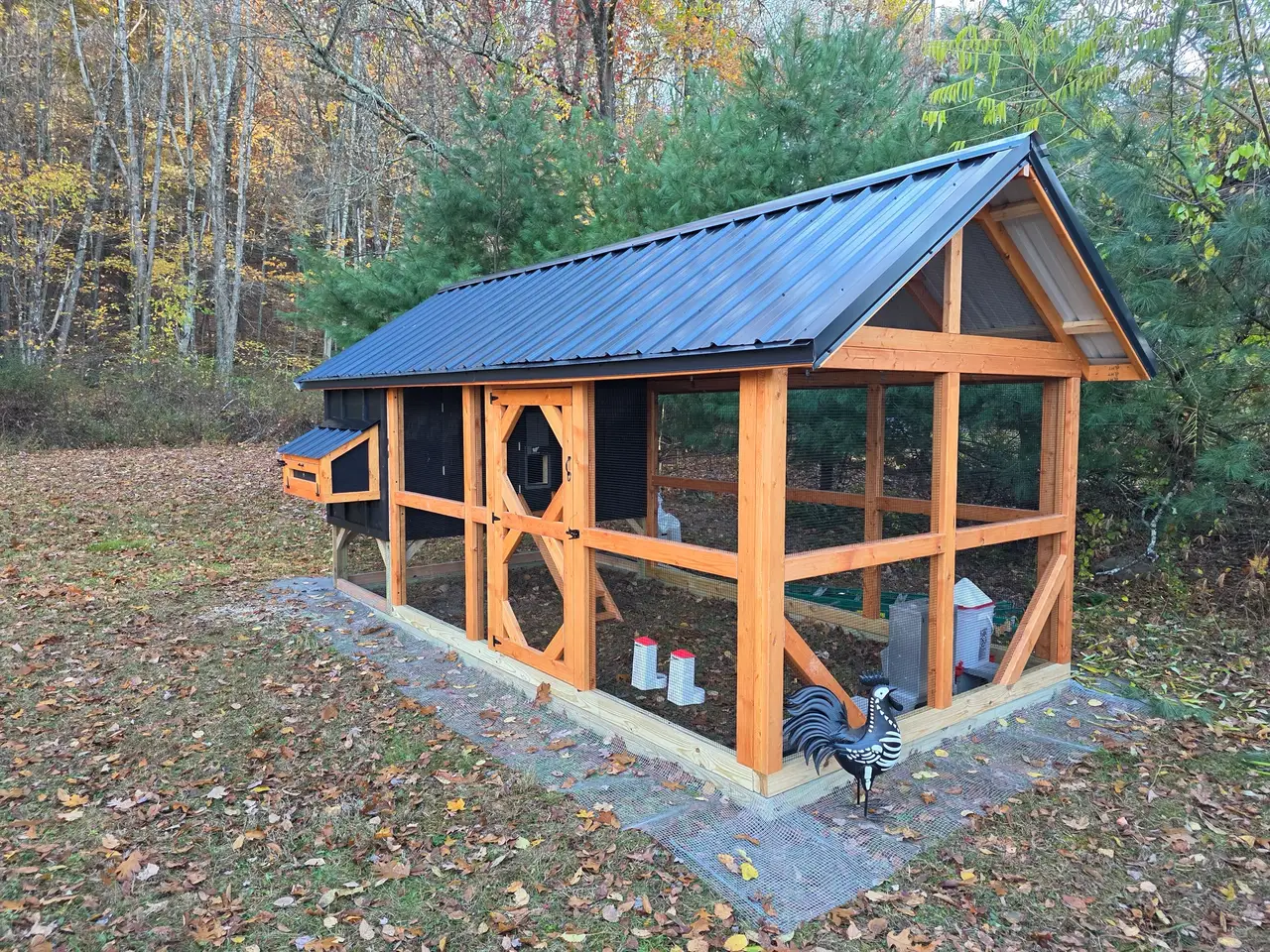
Three steps to a coop your hens are safe in
Tell us about your flock and yard
Send a quick request or call. Quotes are free, and so are site visits within 15 miles.
We design it with you
You pick the size, colors and features. We can put together a 3D rendering so you see it before we build.
We build it and set it up
We prebuild about 80% in our shop, then assemble it on your property, usually in a day or two.
Healthy hens, easy chores, eggs at your door
Safe hens, day and night
Half-inch PVC-coated hardware cloth on every window and run, never chicken wire, and a 2-foot dig-proof skirt around the perimeter. An automatic coop door is standard.
Chores that stay easy
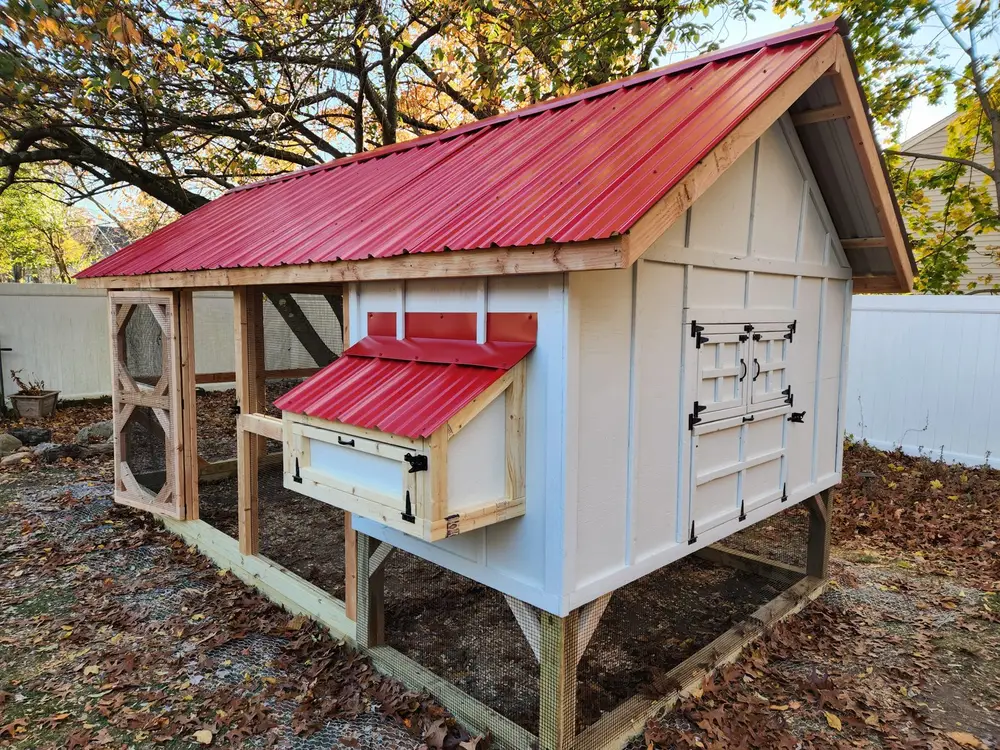
A deep-litter design for easy cleaning, plus easy-access doors and ladder, so tending the flock does not become a burden.
Fresh eggs, close at hand
Nesting boxes are built in, and every coop is sized to its flock so hens have room to lay and settle.
Sizing your coop is critical
A general guideline is 8–15 square feet of outdoor run space per chicken. A flock of 10 should have 80–150 square feet to move, forage, and behave naturally. Proper spacing reduces stress, minimizes aggression, and supports flock health. Coop space can be more compact, since chickens mostly use the coop to roost and shelter at night. Cooperative Extension's small-flock guidance recommends a minimum of 3 to 4 square feet of coop floor per standard hen.
Fresh eggs from a neighbor, not a store
Backyard flocks everywhere have more eggs, chicks, and started pullets than they need, and neighbors nearby looking for exactly that. The Backyard Exchange connects you free: find sellers near you, or list your own flock in minutes. No fees, ever.
Not sure what you need? Let's figure it out.
Two free tools take you from "I want chickens" to exactly how many hens and what size coop. No guessing, no sales pressure.
Can you keep chickens in your town?
Every New Jersey town sets its own rules, and most aren't obvious. We looked up the ordinance for 564 towns across 21 counties, hen limits, roosters, permits, and setbacks, so you know before you build. Search yours on our free NJ chicken-law map.
Check your town's rulesHow much does a chicken coop cost?
Turn-key coops, built on-site. Final pricing depends on size, features, and finishes. Here's where each tier starts.
The questions most people have first
What will it cost?
Coops start at $4,950 for The Nest (4 to 5 hens). The base price covers the build, predator-proofing and on-site assembly. Travel beyond 15 miles of our Branchville base is extra, at a $250 minimum or $6 per mile. 50% deposit to start the build; we take check, credit card, or cash. We do not offer financing.
See what is included →How does delivery work?
We build about 80% of it in our shop, carry the sections to your property, and assemble them there, usually in a day or two. Lead time is about 2 weeks, and up to 6 weeks from March through June.
Delivery and site prep →Do I need to prep the yard?
On uneven ground we either add blocks to reach grade or level it. For bigger areas we bring in a local site-prep contractor. We will look at your yard when we quote.
Is your yard coop-ready? →Does my town allow chickens?
Every New Jersey town sets its own rules. We looked up the ordinance for 564 towns so you can check yours before you spend anything. Typically the homeowner pulls any permit, and we may be able to assist.
Check your town →Will it hold up in winter?
The metal roof is engineered for a 40 to 50 psf snow and wind load. Chickens do not need heat in a New Jersey winter; good ventilation matters more.
Winter care →See how a build runs, step by step. We also build duck coops, the Homestead Package, and other enclosures, and we work across the state. Check our service areas.
Predator-proof by design
Predator protection is one of the most important elements of a properly built coop, especially in areas with active wildlife. Every Triano Farms coop is designed with layered defenses that stop predators before they ever reach your flock.
- A 2-foot-wide hardware-cloth skirt laid at ground level around the entire perimeter, stopping raccoons, foxes, and coyotes from digging underneath.
- All runs and windows enclosed in ½" PVC-coated hardware cloth. Far stronger than chicken wire, and resistant to rust, chewing, and bending.
- Layered defense against climbing, digging, and squeezing predators, without giving up airflow or visibility.
- A secure, long-term solution that keeps birds safe day and night, without compromising durability, function, or looks.
Our services
Chicken Coops
Predator-proof coops built for healthy, low-stress flocks: proper space, ventilation, and easy maintenance, with layouts and finishes customized to you.
More info →Duck Coops
Secure, easy-to-clean housing built for ducks: low roosts, room to move, and the same predator-proof construction that keeps the flock safe day and night.
More info →Rabbit Hutches
Walk-in enclosures and mobile tractors that prioritize protection, comfort, and cleanliness, for breeding, meat, or pets.
More info →Goat & Livestock Shelters
Run-in shelters and enclosures for goats, sheep, and other small livestock: weather-resistant, built for strength and daily use, sized to your animals.
More info →Custom Sheds
Storage, garden, and utility sheds built on-site to your size and finish: the same real-lumber, built-to-last construction as our coops.
More info →Homestead Package
Going all-in? Bundle a chicken coop, a rabbit coop, and a run-in for your other animals, designed to work together on your land.
More info →




Rated 5.0 across 29 Google reviews
Frequently asked questions
How long does it take to build a chicken coop?
The typical lead time is about 2 weeks after we receive your order. A heavier backlog can affect that timeline.
When laying the predator skirt, do you bury it?
We can. Most customers prefer to do their own landscaping over it. Rock gardens or mulch beds over the skirt are a popular look. Buried or not, the skirt still provides full protection.
Do you build on uneven ground?
We assess the area and either add blocks to reach grade or level it: we handle the easier jobs ourselves, and for bigger areas we bring in a local site-prep contractor. Setting the coop on blocks does not affect security; the predator skirt still provides full protection.
Can I customize size, color, and features?
Yes. This is your world and we are here to bring your vision to life. Many customers match the coop to their home's color scheme to tie everything together.
Do I need a permit for a chicken coop in NJ?
Usually not a construction permit if the coop is 200 square feet or less, no more than 10 feet tall, and has no plumbing or gas. New Jersey's construction code exempts sheds and similar accessory structures of that size. You may still need zoning approval for placement and setbacks, and some towns require a separate permit to keep hens.
Have your own plans, drawings, or ideas?
Found a coop, shed, or enclosure you love? Have your own drawings, photos, or a board full of ideas? Bring them. We're happy to take a look at whatever you have and put together a quote to build it.
Ready to keep your flock safe?
Tell us about your animals and your land. We'll design a coop built to last, on-site, just for you.